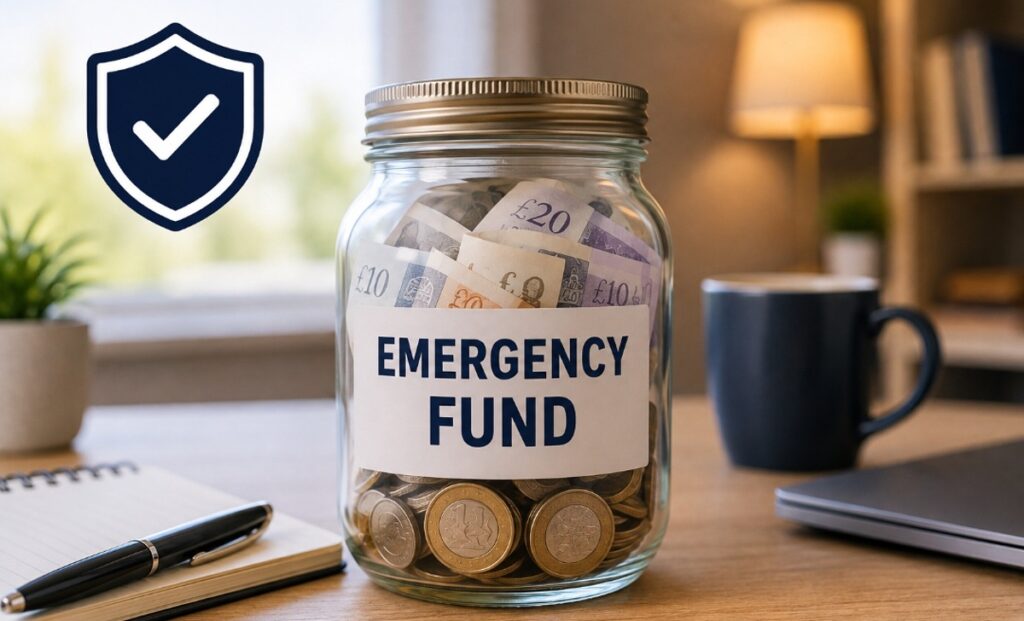
An emergency fund is simply money set aside for the things you can’t plan for: a boiler breaking down, your car failing its MOT, a sudden gap between jobs, or an unexpected bill landing at the worst possible time. Without one, these moments usually end up on a credit card or a loan, which turns a one-off problem into a longer-term debt.
The advice you’ll often see is to save three to six months of living expenses. For a lot of people on a tight budget, that number feels so far out of reach that it stops them from starting at all. This guide is written for that situation specifically: how to build real protection when money is already stretched, starting from wherever you actually are right now.
Why an Emergency Fund Matters More Than It Might Seem
Around a quarter of UK adults have less than £100 in savings, which means a huge number of households are one unexpected bill away from serious financial stress. When that bill arrives and there’s nothing set aside, the usual options are a credit card, an overdraft, or a short-term loan, all of which come with interest that turns a £500 problem into a £600 or £700 one by the time it’s paid off.
An emergency fund breaks that cycle. It’s not about becoming a super saver overnight. It’s about having enough of a buffer that one bad week doesn’t turn into months of repayments on top of your normal bills.
Forget the Six-Month Rule for Now
Most general finance advice says to aim for three to six months of essential expenses. That’s a reasonable long-term target, but if you’re starting from very little, it’s not a useful first goal, because it’s too big to feel achievable and too abstract to actually motivate you to start.
A more realistic starting point looks like this:
- £500 is a genuinely useful first target. It covers most car repairs, a broken appliance, or an urgent dental bill. This is the point where you start to feel a real difference when something goes wrong.
- £1,000 covers most boiler call-outs, a replacement fridge-freezer, or roughly a month of reduced income if your hours get cut or you’re between jobs.
- Only once you’ve reached that £1,000 mark is it worth thinking about the bigger three to six month target, and even then, building toward one or two months of expenses first is a more manageable next step than jumping straight to six.
Getting to £500 first, and treating that as the real short-term goal, makes the whole process feel possible instead of overwhelming.
Where to Actually Keep the Money
Your emergency fund needs to do one job well: be there, in full, the moment you need it. That means it should not be:
- Invested in stocks and shares, since the value can drop right when you need to access it
- Tied up in a fixed-term savings bond that penalises early withdrawal
- Sitting in Premium Bonds, since these usually have a delay of around a month before you can get the money out
- Mixed in with your everyday current account, where it’s too easy to spend without noticing
Instead, use a separate, easy access savings account, ideally one that isn’t linked to a debit card you use day to day, so there’s a small extra step between you and spending it. Many digital banks and building societies offer instant or next-day access accounts that pay decent interest, so your emergency fund can grow a little just by sitting there, without being locked away.
The key principle is separation. If your emergency fund lives in the same account as your weekly spending money, it stops functioning as an emergency fund and just becomes part of your general balance, which makes it far too easy to dip into for things that aren’t actually emergencies.
How to Save When There’s Not Much Left Each Month
This is the part that matters most if you’re on a tight income, because the usual advice to “save 10 to 20 percent of your income” simply doesn’t apply when there isn’t 10 to 20 percent spare.
Start with whatever you can automate, even if it’s small. Setting up a standing order for £5 or £10 a week, timed for the day after payday, adds up to somewhere between £260 and £520 over a year. It won’t feel dramatic in the moment, but it works precisely because it’s automatic. You stop having to decide to save it each week, and the money is simply gone from your spending account before you have the chance to spend it elsewhere.
Use windfalls on purpose. Any time money arrives that wasn’t part of your normal budget, a tax rebate, cashback, birthday money, or proceeds from clearing out unused items on Vinted or eBay, put a chunk of it straight into your emergency fund before it quietly disappears into everyday spending.
Try a short savings sprint. Rather than committing to being careful with money forever, which is hard to sustain, try being deliberately strict for just one month. Cut back on the things you can live without temporarily, put whatever you save aside, and treat it as a one-off push toward your first £500 rather than a permanent lifestyle change.
Look at your fixed costs, not just your daily spending. It’s tempting to focus on small daily habits like coffee or lunch out, but reviewing bigger recurring costs, like your phone contract, broadband, or insurance renewal, often frees up more money with less ongoing effort than cutting small purchases. A cheaper broadband deal or a switched insurance policy can free up £10 to £20 a month without you having to think about it again.
Check what support you might already be entitled to. Many UK councils run Household Support Funds offering help with urgent costs, sometimes between £100 and £1,000 depending on your circumstances and where you live. Citizens Advice can also help you check whether you’re missing out on any benefits or energy support you’re entitled to. Getting help with an immediate pressure can free up room to build your own savings buffer at the same time, rather than one draining the other.
Common Reasons People Stall, and What Actually Helps
“I can’t afford to save anything.” Even a very small amount, like £5 a week, genuinely adds up over time and builds the habit, which matters more at the start than the exact amount.
“It’s going to take too long.” Aiming for a smaller milestone first, like £500 rather than a full six months of expenses, and celebrating when you hit it, keeps the process feeling like progress rather than an endless task.
“I’ll just use a credit card if something comes up.” This is understandable, but credit almost always makes emergencies more expensive in the end, once interest is added on top of the original cost. A modest savings buffer is cheaper and far less stressful than debt, even a small one.
“I need to be able to get to it quickly.” This is a fair concern, and it’s exactly why an easy access account, rather than anything locked away or invested, is the right home for this money. You should be able to access it within a day if something genuinely urgent comes up.
Keeping the Fund for Actual Emergencies
Once you’ve built even a small buffer, it’s worth being clear with yourself about what counts as an emergency and what doesn’t. A genuine emergency is something urgent and necessary: a broken boiler in winter, a car repair you need to get to work, a sudden drop in income. It is not a holiday, a new phone upgrade, or Christmas presents, even though those can feel urgent in the moment too.
Keeping this boundary clear protects the fund’s actual purpose. If it gets spent on non-emergencies, you end up back at square one exactly when a real emergency arrives, which defeats the point of building it in the first place. Some people find it helpful to keep a completely separate, smaller savings pot for planned but irregular costs, like car insurance renewals or Christmas, so that money doesn’t get mixed in with the true emergency fund and drawn down for the wrong reasons.
Rebuilding After You’ve Used It
At some point, you will probably need to dip into your emergency fund, and that’s exactly what it’s there for. When that happens, it isn’t a failure. It’s the fund doing its job. The important part is going straight back to your small, automated savings habit afterward, rather than treating the fund as spent and forgetting about it. Rebuilding after a genuine emergency is just as important as building it the first time, since the next unexpected bill is never too far away.
Emergency Fund vs Paying Off Debt: Which Comes First
If you’re also carrying debt, such as credit card balances or a personal loan, it’s natural to wonder whether you should focus entirely on clearing that first before saving anything at all. In most cases, a small blended approach works better than going all in on one or the other.
A common and sensible approach is to build a very small starter buffer first, often somewhere around £250 to £500, before putting everything else toward high-interest debt. The logic is straightforward: without any buffer at all, the next unexpected bill is likely to go straight back onto the same credit card you’re trying to pay off, undoing your progress. Once that small buffer exists, shifting your focus to clearing the debt, particularly anything with a high interest rate, usually saves you more money overall than continuing to build savings at the same time, since the interest you’re paying on debt is almost always higher than the interest your savings would earn.
Once the high-interest debt is cleared, you can redirect that same monthly amount back into growing your emergency fund toward the fuller three to six month target.
Building the Habit When Income Is Irregular
If you’re self-employed, on a zero hours contract, or your income simply varies from month to month, the standard advice to save a fixed percentage each month doesn’t always fit neatly. A slightly different approach tends to work better here.
Save a percentage rather than a fixed amount. Rather than committing to a set £20 a month, which might be impossible in a quiet month and too small in a good one, try setting aside a percentage of whatever comes in, so your saving naturally scales with your income.
Treat higher-earning months as catch-up opportunities. If you have a particularly good month, resist the urge to spend the extra straight away, and instead use it to top up your emergency fund more aggressively, since quieter months will naturally slow your saving rate anyway.
Build toward a slightly larger target. If your income is genuinely unpredictable, aiming a bit higher than the standard three months, closer to five or six months of essential expenses once you’re able, gives you more room to absorb a longer quiet stretch without financial stress.
Frequently Asked Questions
Should my emergency fund be in an ISA or a regular savings account? Either can work, as long as it’s easy access. A cash ISA has the advantage of being tax-free on the interest, which matters more once you have larger savings, but for a smaller emergency fund the difference is often minor. The most important thing is that the account offers same-day or next-day access without penalties.
What if I don’t have a stable place to live and can’t predict my expenses month to month? In this situation, even a very small, flexible buffer is valuable, and the goal of a fixed £500 or £1,000 target matters less than simply building the habit of setting anything aside regularly, however small, and adjusting the target once your situation becomes more predictable.
Is it okay to use my emergency fund for something that isn’t a total disaster, like a slightly early car service? Generally, try to reserve it for things that are both urgent and necessary, rather than things that are simply inconvenient or could be delayed a little. If something genuinely can’t wait and would otherwise go on a credit card, using the fund is exactly what it’s there for.
How do I stop myself from dipping into it for non-emergencies? Keeping it in a separate account, ideally with a different bank to your main current account, adds a small amount of friction that helps. Some people also find it useful to give the account a specific name, like “emergency only,” as a simple reminder of its purpose every time they log in.