Having no credit history in the UK puts you in a genuinely frustrating position. Lenders want proof you can manage credit responsibly before they’ll approve you for anything, but you can’t build that proof without being given some credit in the first place.
This applies whether you’re young and have simply never borrowed, or whether you’ve just moved to the UK from another country with a perfectly good credit record that unfortunately doesn’t count here.
The good news is that this catch-22 has a clear, well trodden route through it. This guide walks through exactly how to build a UK credit file from nothing, what to use, what to avoid, and roughly how long it takes.
Why Your Existing Credit History Doesn’t Count
If you’ve moved to the UK from another country, this is usually the most frustrating part to accept. Credit records don’t cross borders. Even a strong, long-standing credit history built up in the US, India, Nigeria, Australia, or anywhere else simply doesn’t appear on a UK credit reference agency’s file, because UK agencies like Experian, Equifax, and TransUnion only build their records from UK account activity.
This means that, from a UK lender’s point of view, you look identical to someone who has never borrowed money in their life, regardless of how creditworthy you actually are elsewhere. It’s worth keeping a copy of your overseas credit report anyway, since some lenders will consider it as supporting context alongside your application, but it won’t substitute for an actual UK file.
The practical takeaway is that the sooner you start building a UK-specific record after arriving, the sooner this stops being a barrier.
Why Having No History Is Different From Having Bad History
It’s a common misconception that never having borrowed money means you’ll automatically have a good credit score. In reality, it’s closer to the opposite. Without any borrowing history at all, credit reference agencies have nothing to judge you on, and lenders may struggle to generate a meaningful score for you at all. A completely empty or thin file often gets treated cautiously, in a similar way to a poor one, simply because there’s no evidence either way.
The goal, then, isn’t to avoid credit entirely to stay “safe.” It’s to use a small amount of credit responsibly and consistently, so there’s a visible track record for lenders to assess.
Step 1: Get a UK Bank Account and Settle at a Fixed Address
Before anything else, you need a UK current account, since this is the foundation everything else builds on. Most credit activity, direct debits, salary payments, and bill payments, flows through this account, and it’s also where any credit builder card repayments will come from.
Alongside this, staying at one address for a reasonable stretch of time matters more than people expect. Frequent house moves in your first year can actually work against you, since lenders and credit reference agencies build confidence in your identity partly through address consistency over time.
Step 2: Register on the Electoral Roll
This is one of the simplest and most effective steps available, and it’s often overlooked. Registering to vote, even if you don’t intend to actually vote, allows credit reference agencies to confirm your name and address are accurate and consistent, which lenders rely on heavily when assessing an application. It’s quick to do, free, and can be done whether you live alone, with family, or in shared accommodation.
If you’re not eligible to register on the electoral roll, for example because of your nationality or visa status, this doesn’t have to be a dead end. You can ask the credit reference agencies to add what’s called a notice of correction to your file, explaining why you’re not on the roll, and instead lean more heavily on other proof of address, such as your bank account history, a tenancy agreement, and utility bills in your name, to establish the same kind of consistency.
Step 3: Get Utility Bills and a Phone Contract in Your Own Name
If you’re renting somewhere where utility bills or council tax are handled by a landlord or included in the rent, see if you can get at least one regular bill switched into your own name, such as your mobile phone contract or a streaming subscription paid by direct debit. Even small, regular, on-time payments in your own name contribute to building a visible financial footprint over time.
Step 4: Consider Linking Your Rent Payments
Rent is often the largest regular payment most people make each month, but unlike a mortgage, it isn’t automatically reported to credit reference agencies. Several services now exist specifically to link your rental payment history to your credit file, and some can even back-date several months of past payments if you’ve been paying reliably.
This can be a genuinely useful shortcut, since it turns a payment you’re already making anyway into evidence of financial reliability, without needing to take on any actual credit product first.
Step 5: Apply for a Credit Builder Card
Once your bank account and address history are in place, a credit builder card is usually the next step, and for most people starting from scratch, it’s the single most effective tool available.
These cards are specifically designed for people with little or no credit history. A few things to know about how they work:
- They typically come with lower starting credit limits, often somewhere between £200 and £1,500
- They tend to carry higher interest rates than standard credit cards, sometimes considerably higher, which makes them expensive if you carry a balance
- Providers commonly associated with this category include cards aimed specifically at building credit from a low or zero starting point
The way to use one of these cards safely and effectively is simple, even if it feels almost too basic: put a small, regular purchase on it each month, something predictable like a streaming subscription, then set up a direct debit to automatically clear the full balance every single month. Treat it, in practice, as a direct debit that happens to run through a credit card, rather than as a way to actually borrow money. Because the interest rates on these cards are high, carrying a balance rather than paying in full defeats the purpose and can end up costing you a genuine amount of money for very little benefit.
Before applying, use an eligibility checker, which most providers and comparison sites offer for free. This gives you a sense of your approval chances without leaving a hard search on your file, which matters because applying for several cards in a short space of time can itself look negative to future lenders.
Step 6: Be Patient and Consistent
Building a credit file from nothing is not instant, and it isn’t supposed to be, since the entire point is demonstrating consistency over time. A realistic expectation is somewhere around six to twelve months of steady, responsible use before you see a meaningful, established score appear.
During this period, a few habits matter more than anything else:
- Pay every bill and every credit card balance on time, every time, since payment history is the single biggest factor in your score
- Avoid moving house repeatedly if you can help it, since address stability supports your file
- Avoid applying for multiple credit products in quick succession, since each hard search can temporarily affect your score and a cluster of them close together can look like financial distress even when it isn’t
- Keep your credit builder card usage low relative to its limit, generally staying well under it rather than close to maxing it out
What Happens Once You Have a Track Record
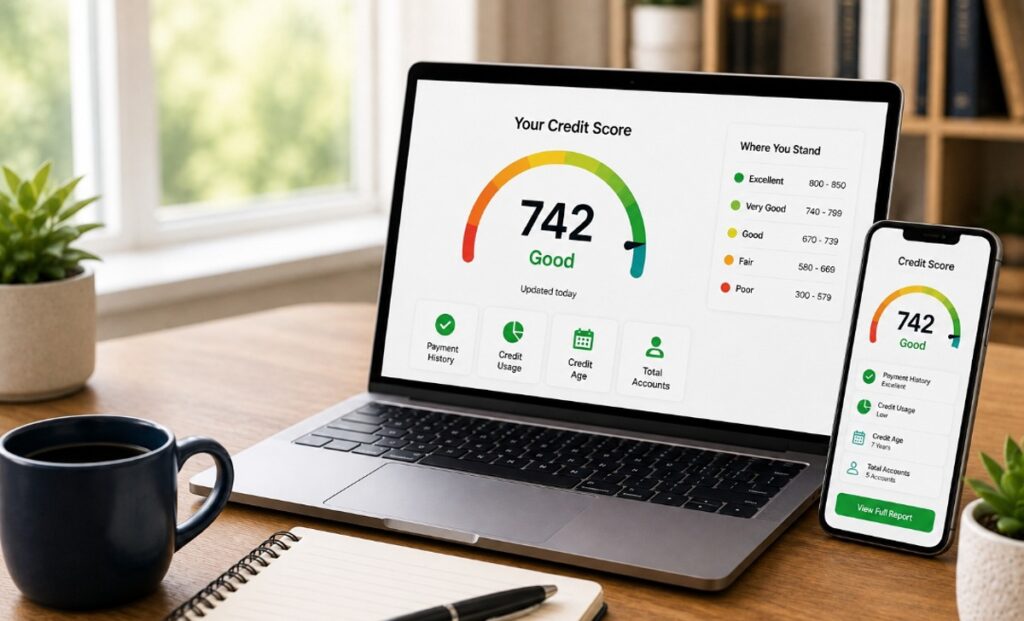
Many people who follow this process closely see their file move from having no score at all to a solidly “good” rating within about six to twelve months, at which point noticeably more options open up. Standard credit cards with better rates, mobile phone contracts without needing a large deposit, 0% balance transfer offers, and eventually mortgage applications with more competitive terms all become realistic once you have an established, positive history behind you.
The overall cost of building credit this way, if done properly, can be genuinely close to zero, since the only real expense is interest, and if you consistently pay your credit builder card in full every month, you avoid that entirely.
Common Mistakes to Avoid
Applying for too many products at once, hoping one will stick. This tends to backfire, since a cluster of hard searches close together makes you look riskier, not safer, and can actually reduce your approval chances across all of them.
Carrying a balance on a credit builder card. Given the high interest rates typical of these cards, letting a balance roll over month to month can end up costing significantly more than the modest benefit of building your file justifies. Always aim to clear it in full.
Assuming a good score in another country will transfer automatically. It won’t, and waiting around hoping it somehow counts just delays the point at which you start building an actual UK file.
Moving frequently in your first year. While sometimes unavoidable, frequent address changes can undermine the consistency that lenders and credit reference agencies are specifically looking for when assessing a thin file.
Special Situations Worth Knowing About
If you’re an international student. Your student visa status doesn’t stop you from building UK credit, and getting a UK bank account and a mobile contract in your own name are just as valid a starting point as they would be for anyone else. The main difference is that your time in the UK may be limited by your visa, so some lenders may factor that into longer-term products like larger loans, though everyday credit builder cards and bank accounts work the same way.
If you’re a graduate with no credit history despite being in the UK for years. This is more common than people expect, particularly for people who paid for everything in cash or on a debit card throughout university. The same steps apply regardless of how long you’ve lived in the UK: what matters to lenders is your credit activity, not your length of residency alone.
If you’ve been refused a credit builder card. This can happen even with no negative history, sometimes simply because a lender’s internal criteria are stricter than others. Try a different provider rather than assuming you’ll be refused everywhere, and use an eligibility checker first to avoid unnecessary hard searches.
If you’re worried about scams targeting people trying to build credit. Be cautious of anyone offering to “sell” you a ready-made credit history or asking for payment to add you as an authorised user on someone else’s account for a fee. Genuine credit building takes time and is based on your own financial activity; anything promising a shortcut for money is worth treating with real suspicion.
Frequently Asked Questions
How long before I see a real difference in my score? Most people see a visible, established score within six to twelve months of consistent activity, though small positive changes, like your file simply existing with some data on it, can appear within the first couple of months.
Do I need a credit builder card specifically, or will any credit card do? A standard credit card works in principle, but with no credit history you’re unlikely to be approved for one, since mainstream cards are designed for applicants who already have an established file. Credit builder cards exist specifically to bridge that gap.
Will opening a savings account help my credit score? Not directly. Savings accounts don’t generally appear on your credit file in the same way credit products do, since they don’t involve borrowing. They’re still worth having for other reasons, just not as a credit-building tool specifically.
Is it worth paying for a credit monitoring service while building my history? Not necessary. The free services from Experian, ClearScore, and Credit Karma give you everything you need to track your progress without paying a monthly fee, so there’s rarely a reason to pay for premium monitoring at this stage.