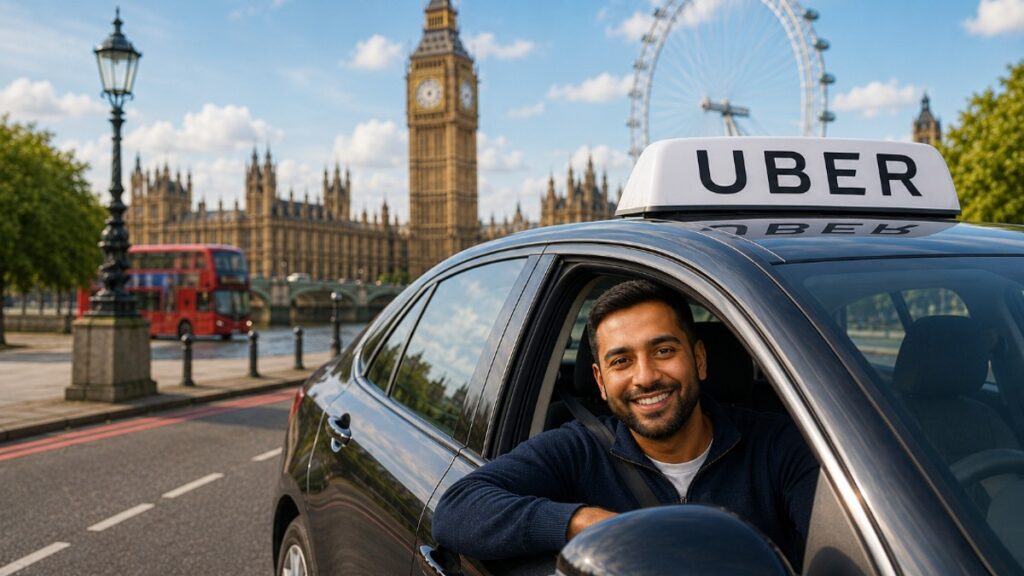
If you have ever thought about driving for Uber in the UK, you are probably wondering where to even start. There is a lot of information out there, and some of it is confusing or out of date. This guide walks you through the whole process in plain English, from the very first requirement to the moment you accept your first trip.
We will cover who can apply, what documents you need, how the private hire licence works, how much it costs, how insurance fits in, and what happens after you are approved. By the end, you should have a clear picture of what to do next.
Who Can Become an Uber Driver in the UK
Before you spend any time or money on paperwork, it helps to check whether you actually qualify. Uber has a set of basic rules that apply across the UK, though some cities add their own extra requirements on top.
To drive for Uber, you generally need to:
- Be at least 21 years old
- Hold a full UK driving licence (not a provisional one)
- Have held that licence for at least one year, though many cities such as London expect closer to three years of driving experience
- Have a National Insurance number
- Be legally allowed to work in the UK
- Own or have access to a car that meets Uber’s requirements for age, condition, and number of doors
If you have an EU driving licence rather than a UK one, you will need to exchange it for a UK licence before you can go through the onboarding process. This is done through the DVLA and can take a few weeks, so it is worth starting early if this applies to you.
It is also worth knowing that Uber checks your driving record with the DVLA as part of the application. A few minor points on your licence, such as a speeding fine from a few years ago, will not usually stop you from being approved. However, serious offences or a pattern of dangerous driving convictions are likely to lead to a rejection.
Step 1: Get a Private Hire Licence
This is the step that trips up most new applicants, mainly because it takes the longest. You cannot legally carry paying passengers in the UK without a private hire licence, and Uber will not activate your account until you have one.
Private hire licences are issued by local councils, not by Uber. If you plan to drive in London, your licence comes from Transport for London, usually shortened to TfL. This licence is often called a PCO licence, a name left over from the days when it was issued by the Public Carriage Office. Outside London, you apply through whichever council covers the area you plan to drive in, such as Birmingham City Council or Manchester City Council.
To get your private hire licence, you will usually need to go through the following:
- An online application. You fill in your details and pay a licensing fee. In London, a new licence currently costs around £124, though this can change, so always check the current fee on your council’s website before applying.
- An enhanced DBS check. This is a background check that looks at your criminal record in detail. It is a standard requirement for anyone who works closely with members of the public, including taxi and private hire drivers. The check is usually arranged through an approved provider and can take anywhere from a few days to a few weeks to come back.
- A medical examination. You will need to see your GP or another registered medical practitioner to confirm you are physically fit to drive. There is usually a form your council will give you to take to this appointment, and you may need to pay a fee for the exam itself.
- A topographical or knowledge test. Some councils, including TfL for certain licence types, ask you to prove you know your way around the local area. This might involve a written test, an online assessment, or in some cases an in-person exam.
- A safeguarding awareness course. Because private hire drivers often carry vulnerable passengers, including children and people travelling alone at night, most councils require you to complete a short training course covering safeguarding and passenger safety.
- An English language check. If English is not your first language, some councils, including TfL, may ask you to demonstrate a certain level of English proficiency, either through a recognised qualification or a short test.
Once all of this is submitted, your council will review everything and, if approved, issue your private hire licence. Processing times vary a lot depending on where you live and how busy your local licensing office is.
Some drivers get approved within a couple of weeks, while others wait a couple of months. It is a good idea to apply as early as possible and keep checking your application status rather than assuming it will happen automatically.
Step 2: Arrange Private Hire Insurance
Here is something a lot of new drivers do not realise until it is too late: your normal car insurance policy will not cover you once you start carrying paying passengers. If you get into an accident while working and you only have standard personal insurance, your insurer can refuse to pay out, and you could be left covering the costs yourself.
To drive legally for Uber, you need a specific type of policy known as private hire insurance, sometimes called hire and reward insurance. This type of cover is designed for people who use their car to earn money by transporting passengers.
A few things to keep in mind when shopping for this insurance:
- Prices vary quite a lot between providers, so it is worth getting several quotes rather than accepting the first one you see
- Your age, driving history, and the type of car you drive will all affect the price
- Some insurers offer pay as you go or pay per mile policies aimed specifically at Uber and other private hire drivers, which can work out cheaper if you do not drive full time
- Always check exactly what the policy covers, including whether it protects you during the time you are waiting for a fare as well as while you have a passenger in the car
Once you have your policy, keep a digital copy of the certificate somewhere easy to access, since you will need to upload it during the Uber registration process and again whenever it renews.
Step 3: Sort Out Your Vehicle Paperwork
Alongside your driving licence and insurance, you will need a few documents relating to your car itself.
- The vehicle logbook, known as the V5C. This proves the car is registered in your name, or that you have permission from the registered owner to use it for private hire work. If you are using a car that belongs to a family member or you lease your vehicle, make sure you have written permission or the correct paperwork showing you are allowed to use it commercially.
- A valid MOT certificate. Any vehicle over three years old needs a current MOT to be roadworthy and legal to drive. Some councils and Uber itself may ask for more frequent MOT checks for private hire vehicles compared to ordinary cars, so check your local requirements.
- Proof your car meets Uber’s vehicle standards. Uber has rules around the age, condition, and type of vehicle you can use, and these rules differ depending on which service tier you want to drive for, such as UberX, Uber Comfort, Uber Green, or UberXL. Electric and hybrid vehicles are increasingly encouraged, partly because of low emission zone rules in cities like London, and partly because Uber has committed to becoming a fully electric platform in some markets over time.
Step 4: Register With Uber Itself
Once your private hire licence has been approved, you can finally start the Uber side of the process. This part is much quicker than getting your licence, usually taking just a few days once your documents are submitted.
Here is what to do:
- Go to the Uber website or download the Uber Driver app and create an account using your email address and phone number
- Choose the city you plan to work in and select the type of service you want to sign up for
- Upload your documents: your driving licence, your private hire licence, your insurance certificate, your MOT certificate, your vehicle registration document, a recent bank statement, and a clear profile photo
- Complete Uber’s online onboarding course, which walks you through how the app works, how fares and payments are calculated, and what is expected of you as a driver
A quick tip that can save you a lot of hassle: take your document photos in good lighting against a plain background, and make sure every corner of the document is visible and not cropped out. Blurry, dark, or partially hidden photos are one of the most common reasons applications get delayed or sent back for resubmission.
Uber’s team will review everything you submit. If anything is missing or unclear, they will usually let you know through the app so you can fix it and resubmit. Once everything checks out, your account will be activated and you can go online to start accepting trips.
Step 5: Understand Your Tax Responsibilities
This is a part that catches many new Uber drivers off guard. Even though Uber drivers in the UK are legally classed as “workers” for certain rights, such as minimum wage and holiday pay, they are still treated as self-employed for tax purposes. That means the responsibility for paying the right amount of tax falls on you, not on Uber.
Here is what that means in practice:
- You need to register for Self Assessment with HMRC. If this is your first tax year earning money this way, you must register by 5 October following the end of that tax year.
- You will need to file a Self Assessment tax return every year, with the deadline for online returns falling on 31 January.
- You are responsible for paying income tax and National Insurance contributions on your earnings, though you can deduct legitimate business expenses first, such as fuel, vehicle maintenance, and your private hire insurance.
- Keeping clear records from day one makes this process much less stressful. Many drivers use a spreadsheet or a simple app to track their earnings and expenses as they go, rather than trying to piece everything together the week before the deadline.
A lot of new drivers open a separate bank account just for their Uber income and expenses. It is not a legal requirement, but it makes it much easier to see exactly how much you have earned and spent, and it avoids the headache of sorting personal and business transactions at tax time.
Step 6: Keep Everything Renewed and Up to Date
Getting approved is not the end of the process. Private hire driving comes with ongoing requirements that you need to stay on top of.
- Your private hire licence will need to be renewed before it expires. Renewal periods vary by council, and some now issue shorter licences with more frequent reviews.
- Your enhanced DBS check usually needs to be renewed roughly every three years.
- Your MOT and insurance need to stay valid at all times. Driving with an expired MOT or lapsed insurance is illegal and can also get your Uber account suspended.
It is worth setting calendar reminders a month or two before each of these is due, so you are never caught out by a sudden expiry that stops you from working.