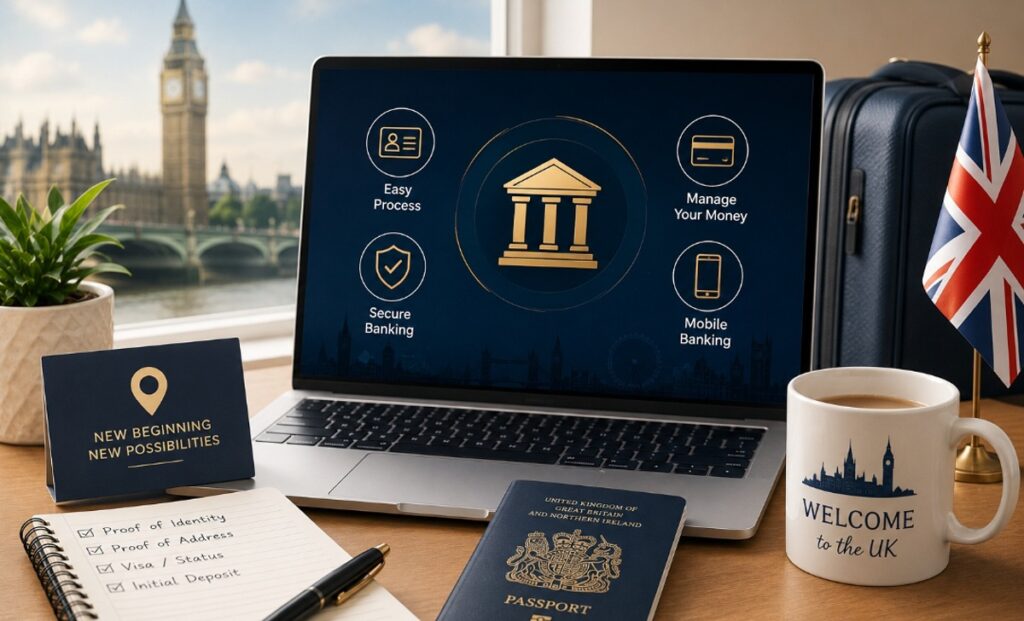
Moving to the UK comes with a long list of things to sort out, and a bank account tends to sit near the top, since almost everything else depends on it: getting paid, paying rent, setting up bills, and even building the credit history you’ll need later for things like a mortgage or a phone contract.
Yet this is also one of the first places new arrivals hit a genuinely frustrating obstacle: many banks want proof of a UK address before they’ll open an account, but you often need a bank account before you can properly secure a place to live. This article walks through how to get past that, which banks tend to work best depending on your situation, and what to expect at each stage.
The General Problem New Arrivals Run Into and How to Get Around It
The problem that new arrivals run into is that traditional banks ask for a recent utility bill, tenancy agreement, or council tax bill as proof of address, but you may not have any of these yet if you’ve only just landed or are staying somewhere temporary while you look for permanent accommodation.
The most practical way around this is to split your approach into two stages.
Stage one: open a digital bank account first. Digital-only banks such as Monzo, Starling, Revolut, and Wise are generally far more flexible about proof of address, and some don’t require it at all to get started. These accounts can often be opened within minutes using just your phone and a passport, which makes them the natural first step for handling day to day spending, receiving your salary, and paying for things while you get properly settled.
Stage two: open or add a traditional bank account once you have an address. Once you’ve secured longer-term accommodation and have a utility bill, tenancy agreement, or similar document in your name, you can then open an account with one of the larger high street banks if you want access to a wider range of services, such as overdrafts, mortgages, or in-branch support.
This two-stage approach solves the circular problem cleanly: you’re never stuck needing an address to get a bank account and a bank account to get an address, because the digital bank fills that gap in the meantime.
What You’ll Typically Need
Requirements vary by bank, but broadly you should expect to provide:
Proof of identity. A valid passport is the most commonly accepted document. Depending on your immigration status, you may also be asked to show your Biometric Residence Permit, or your eVisa status, which can usually be shown as an online share code rather than a physical document, since the UK has moved toward digital immigration status for many visa types.
Proof of address, where required. This is the document that trips people up most. Acceptable proof often includes a recent utility bill, a council tax bill, or a tenancy agreement, though the exact list depends on the bank. Some banks will also accept a letter from your employer or university confirming your UK address, or in some cases a confirmation letter from a letting agency, which can be genuinely useful if you don’t yet have a utility bill in your own name.
A reference from your current bank, occasionally requested, particularly if you’re trying to open an account before you’ve actually arrived in the UK.
Every bank has slightly different requirements, so it’s worth checking the specific bank’s website before applying rather than assuming the same documents will work everywhere.
Fastest Starting Point is Digital Banks
For most new arrivals, opening a digital bank account is the quickest and least frustrating way to get moving.
- Monzo and Starling are mobile-only banks with straightforward apps, no monthly fees on their basic accounts, and comparatively flexible address requirements, since some accounts can be opened before you have a fixed UK address at all
- Wise is particularly well suited to holding and moving money in multiple currencies, which can be useful if you’re still receiving or sending money internationally during your move, and it generally does not require UK residency to open an account
- Revolut offers similar flexibility, with fast account opening and support for handling money across currencies
These accounts typically activate within minutes to a few days, compared with the one to three weeks a traditional bank might take once you include card delivery and verification. They’re genuinely functional UK bank accounts, not just temporary placeholders, so many people continue using them long after they’ve settled in, sometimes alongside a traditional account rather than instead of one.
Traditional Banks: More Services, Stricter Requirements
The larger, long-established banks, sometimes referred to as the “Big Four”, Barclays, HSBC, Lloyds, and NatWest, all offer accounts aimed at new residents, along with wider services like overdrafts, savings products, mortgages, and in-branch support that some digital banks don’t provide.
- HSBC has specific accounts designed for international arrivals and students, and is generally considered one of the more visa-holder-friendly traditional banks
- Barclays offers basic accounts but requires standard proof of address and identity documents
- Lloyds has standard documentation requirements, though it may accept a letter from an employer in place of a utility bill in some cases
- NatWest offers accounts specifically aimed at new UK residents, though experience handling visa holders can vary between individual branches
Because approval and documentation requirements can vary not just by bank but sometimes by branch, it’s worth calling ahead or checking online before visiting in person, especially if your situation is slightly non-standard, such as being on a visa type the bank doesn’t see often.
If You’re Struggling to Open Any Account
If several banks turn you down, it’s worth knowing that UK banks are legally required to offer a basic bank account to anyone with the right to live in the UK, even if your circumstances make a standard current account harder to get approved for.
This basic account typically won’t come with an overdraft or many extra features, but it gives you a functioning UK account for receiving money, paying bills, and building a financial footprint while you sort out anything more complex.
If you’re a refugee or in a similar situation without standard documentation, credit unions can be a useful alternative starting point, since they’re often more flexible with the paperwork they’ll accept, though they may charge small fees that a mainstream bank account wouldn’t.
Once You Have an Account: What to Do Next
Getting the account open is really just the first step. A few things are worth doing early on to make everything that follows smoother.
Get your salary paid directly into it. This is often one of the simplest ways to demonstrate financial stability, both to the bank itself and to any future lender looking at your account history.
Set up direct debits for regular bills rather than paying manually each time, since consistent, on-time payments recorded against your name help build a track record you’ll want later.
Start thinking about your credit history early. A UK bank account is the foundation for building UK credit history, which doesn’t carry over from other countries no matter how strong your credit record was there. Getting your name onto the electoral roll where you’re eligible, and eventually applying for a credit builder card once your account is established, are natural next steps once your banking is sorted.
Keep your address updated with the bank. Banks send important security information and card renewals by post, so an outdated address can cause frustrating account freezes or delays down the line, even after everything else is set up properly.
A Few Practical Tips
- Apply to more than one bank if your first attempt is rejected, since requirements and internal risk appetite genuinely differ between providers, and a rejection from one bank doesn’t mean you’ll be rejected everywhere
- Keep digital copies of your passport, visa documentation, and any address proof ready to upload, since most digital banks handle the entire process through their app
- If you’re applying to a traditional bank in person, bring physical originals of your documents rather than photocopies, since branches typically want to see and verify the real documents directly
- Consider keeping a digital bank account even after you’ve opened a traditional one, since the two often serve different purposes well, with the digital account handling everyday spending and transfers, and the traditional account offering broader services as your finances become more established
Sending Money Abroad Once You’re Settled
A lot of new arrivals also need to send money back home regularly, whether to support family, pay off obligations, or manage property elsewhere. Once your UK bank account is up and running, it’s worth knowing that using your bank’s own international transfer service is often the most expensive option available, since traditional banks typically build in a larger exchange rate margin on top of any stated fee.
Dedicated transfer services, such as Wise, Remitly, and WorldRemit, generally offer noticeably better exchange rates and lower fees than a traditional bank transfer, and most can be linked directly to your new UK account once it’s set up. It’s worth comparing a couple of these before committing to one regularly, since rates and fees do vary depending on the specific country you’re sending to.
Common Problems and How to Handle Them
A bank has rejected your application. This happens more often than people expect, and it isn’t necessarily a reflection of your overall situation, since different banks apply different internal risk criteria. Try a different digital bank first, since their onboarding tends to be more automated and flexible than a traditional bank’s manual review process.
You don’t have a passport with you, or your documents are still with the Home Office. Some banks will accept alternative forms of identification, such as a national ID card or a Home Office letter confirming your status. It’s worth calling ahead to check what a specific bank will accept in your situation rather than assuming you need to wait for your passport to be returned.
Your visa type is unusual and the bank doesn’t seem to recognise it. Digital banks tend to be more used to handling a wide range of immigration statuses through their automated verification systems, so if a traditional bank branch seems unfamiliar with your visa category, a digital bank is often a smoother alternative, at least to get started.
You’re being asked for a UK phone number you don’t have yet. Getting a UK SIM card, even a basic pay-as-you-go one, is usually quick and cheap, and solves this requirement immediately, since most digital bank apps rely on a UK number for verification and security codes.
Frequently Asked Questions
Can I open a UK bank account before I actually arrive in the country? Some banks, particularly digital ones, do allow you to begin the application process before you land, though final activation and card delivery usually require a UK address. It’s worth starting the process a few weeks ahead if your visa and travel plans are confirmed.
Do I need a National Insurance number to open a bank account? No, a National Insurance number is not required to open a bank account, though you will need one separately once you start working, for tax and payroll purposes.
Can I have both a digital bank and a traditional bank account at the same time? Yes, and many people do exactly this long term, using the digital account for everyday spending and transfers, and the traditional account for services like overdrafts, mortgages, or in-branch support that some digital banks don’t offer.
What happens if I move house again after opening my account? Update your address with the bank as soon as possible after any move. Since banks send important security information and replacement cards by post, an outdated address can lead to delays or even a temporary account freeze if the bank can’t verify your details during a routine check.